- Teacher: M’hammed BOUALLALA
- Teacher: Djillali MAHDJOUBI
- Teacher: Wahiba BOUFELDJA

General Microbiology is the study of microorganisms such as bacteria, fungi, and viruses. It covers their structure, classification, metabolism, and role in nature. Practical work allows students to become familiar with laboratory techniques.
This course aims to provide students with a deep understanding of microorganisms and their role in nature. The various chapters cover topics such as bacterial classification, virus structure, bacterial metabolism, and laboratory techniques. Communication and discussion spaces enable students to exchange ideas and ask questions to deepen their understanding. 😊
- Teacher: Mohammed MOUSSAOUI
- Teacher: Khalil Bounaama
- Teacher: Djillali MAHDJOUBI
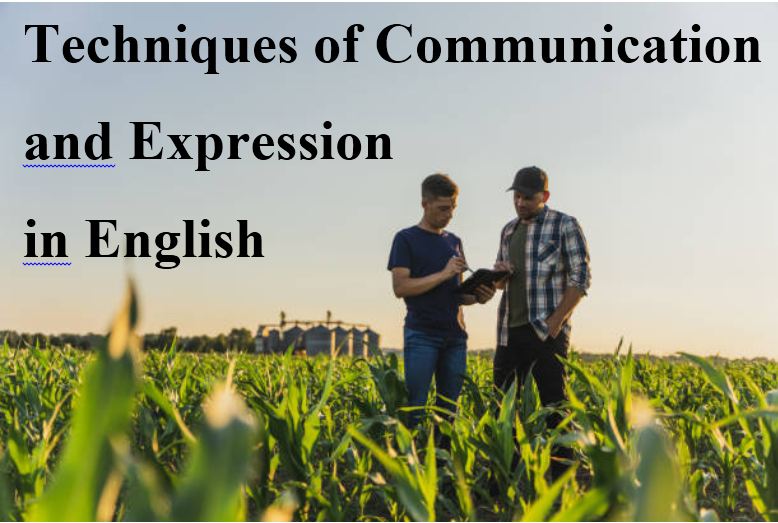
 The module of "Techniques of Communication
and Expression in English" is based on the principle
that language is, above all, a tool for communication. In this regard,
communication is often understood as the process of exchanging information,
ideas, thoughts, or feelings between individuals or groups through oral,
written, visual, or non-verbal means.
The module of "Techniques of Communication
and Expression in English" is based on the principle
that language is, above all, a tool for communication. In this regard,
communication is often understood as the process of exchanging information,
ideas, thoughts, or feelings between individuals or groups through oral,
written, visual, or non-verbal means.
In the field of communication, the term "techniques" refers to specific and intentional methods or strategies used to enhance the clarity, effectiveness, and impact of message delivery. These are deliberate and acquired approaches designed to facilitate understanding, build connections, and achieve desired outcomes in various contexts. They encompass both verbal and non-verbal practices, tailored to the medium and purpose of the interaction.
English is a globally spoken language, widely recognized as the primary means of communication in the realms of culture, business, and, most importantly, science.
The goal of this module, i.e. "Techniques of Communication and Expression in English", is to help you_ 2nd year agricultural students_ to develop and apply various methods for effective communication in English. Its relevance to your academic and professional life lies in the fact that, as future engineers, you will frequently be required to work in teams, present technical concepts, write reports, and interact with others—situations that demand strong communication skills.
The course content is structured into several units designed to guide you through technical English in general, and more specifically, English for engineering. This serves as a transition between general English and agricultural engineering English (English for agronomists).
To begin with, you will be introduced to the concept of language, including its definition, key properties, the English language itself, and ultimately, technical English. You will then develop basic communication skills such as pronunciation and engaging in dialogue—learning how to ask and answer questions effectively. Regarding vocabulary, the course addresses English word formation and includes domain-specific terms related to plants, animals, and the environment. Finally, you will be introduced to fundamental academic writing techniques.- Dr.: System Administrator
- Dr.: Abdelkarim MAKHLOUFI